From an outside perspective, wardrobes may not seem important. However, the use of different wardrobes in our film was crucial, for it allowed the audience to have an idea of who the main character is and what he does. It also provided disguises and makes the audience think that we aren’t only using three cast members.
Therefore, we chose three different wardrobes for those getting beaten up, to symbolize the fact that the worker was at different locations with different people.
Finding the perfect cast for the movie was difficult due to the fact that we are teenagers in high school. People have things that they have to prioritize, therefore, not everyone can readily available for the day of the shoot. We did end up countering difficulties, especially with scheduling specific dates and times. This eventually led to a delay due to the fact that the cast we initially requested was never available on the days of filming. We were forced to find a compromise for the absence of people. Therefore, we chose to only use the group, with an additional friend who seemed to have everything we were asking for.
This resulted in a total cast of three people:
Eric Joa- Playing the main character or worker
Daniel Figueroa- The person getting beat up.
Jason Sanchez- The other person getting beat up.
This casting list simplified the dates and times which we needed to film due to the fact that we did not have to account for too many extras.
Since the last production meeting, my partner and I have actually made real progress. We fixed the disaster which had occurred (losing all of our cast members), we obtained sufficient equipment to produce a decent film, assured that the location and time at which we filmed was suitable for all cast members, and we filmed the entire film opening adequately. However, we are having trouble with the editing of the film. Being a novice film editor it is not simple, however, I am persevering through and pushing my creative boundaries. Learning the program was difficult, but now that I understand it should be simple. The filming was quick and efficient, my partner and I pumped out scenes like a well-oiled machine, and the cast members held there questioning until the end.
Due to altercations with the cast and the equipment we were planning on using, the filming for the opening was delayed. The actors we had first casted were not able to manage the filming into there busy schedules and failed to notice us on time. However, with this unfortunate news came good outcomes. My partner and I were able to find more people to assist in the filming and production of the film that will be available with certainty. They will also provide some decent equipment to make the film opening seem more professional.
Just like an essay, we first began with a rough draft. This included some of the general ideas we want to portray to the audiences, as well as some difficult scenes we believed we would have trouble with later. In the rough draft, we did not want to follow the script exactly due to the fact that we only needed to cover the scenes and ideas we believed to be most difficult.
Thankfully we did the rough draft, for it made us realize how difficult it will be to create and develop the ideas we had in mind. However, we decided not to give up on our vision. In the rough draft, we include several difficult scenes, camera movements, angles, shots, etc. Carrying out a rough draft allowed us to inspect and investigate the different aspects of our film. Ensuring that every aspect was covered for ease of reproduction. The rough draft was very… rough, however, this is only a taste of what is to come.
In terms of shooting the film, I wanted to ensure that we were able to properly film certain shots. For example, maintaining a steady hand whilst creating fast manual zooms or follow shots of the faces. The rough draft made us realize that we will require more equipment to increase the quality of the film opening. It also allowed me to practice my editing techniques, such as the expansion of time, action matching, different transitions, etc. We also got to scout an area that is evidently not going to suffice. We will not be able to shoot it at our school, for it is too noisy and the rooms are too small. Therefore, we must find another office-like area to shoot the scene in. It will be evident that the action sequences in the rough draft are choppy, however, well acted. We want to ensure that we can reproduce the acting and improve on the editing.
In terms of audio, I wanted to make sure that I was able to properly blur the curse words without any mistakes for it would be inappropriate to have any in it. Blurring the curse words will also produce some comedic relief for the serious introduction of the film. We wanted to also see the sensitivity of the microphone integrated into our mobile phones. This is important because we want to make sure that there is minimal unwanted background noise. Ensuring that the dialogue will not be overpowered by the noises of our surroundings.
The magic of editing… Only a few have the magic touch, to create something out of nothing. And believe me, that is not us. My partner and I’s ability to edit is slim to none. Our knowledge of certain editing programs is negligible. And our understanding of how to properly edit is non-existent. Therefore, we were given a quick lesson about what editing was. We were informed that editing is the “art of assembling shots together to tell a visual story of a film.” In other words, editing is putting clips together to create one big clip. My partner and I already knew this, however, what we didn’t know is that there are different ways in which one can transition from clip to clip. Each transition having a different effect on the scene you are creating.
In order to practice our editing skills, we were assigned a task to complete certain requirements. Therefore my group and ! decided to create an action sequence for it would help us in creating our film opening. Whilst editing the action sequence we had to keep in mind certain techniques. The techniques included expansion of time, cross-cutting, and action match. Expansion of time is exactly what the name entitles. It is making an action or event longer through the use of different shots and angles. This can be seen in our short video when both “chairmen” are charging at one another. Another editing technique was cross-cutting. Cross-cutting or parallel editing is the technique which alternates between two or more scenes that often occur at the same time but in different locations. This can be seen when both men are staring each other down, as well as when they begin charging at one another. The final technique which we were required to use was an action match. Action matching is an editing technique that cuts two alternate views of the same action together at the same moment in the action in order to make it seem uninterrupted. This can be seen when the two “chairmen” collide and hit one another, as well as when both are charging at one another.
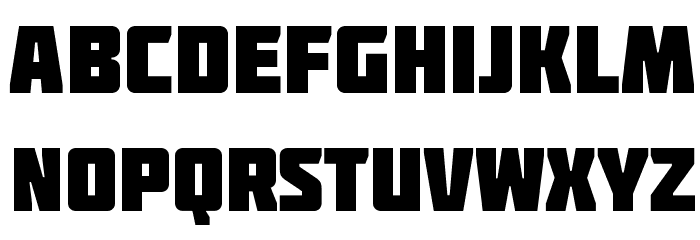
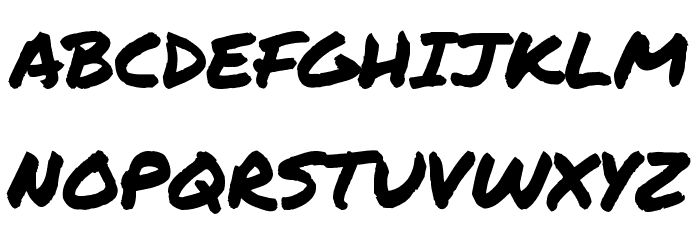
You would think choosing a font would be easy… but it’s really not. We first had to think about the aspects of our film and when we would be including text. Due to the structure of the film opening we can’t really implement text into the film wherever we would like because too much will be going on to pay attention to the text. However we did find one really good scene to add the title sequence into. It will be implement in the scene of the drug trade as well as when the coder is working. We chose these scenes because we can implement the text into the computer scene as the coder is working and we can also implement text into the bag which the pill will come in.
However, we still don’t know the font we are going to use. Therefore, we searched for inspiration on the internet. We obviously looked at Deadpool because it is kind of our favorite movie. The font for Deadpool is extremely unique and specific to the type of movie. Therefore, we will not be able to use that many aspects from it.
Due to the fact that the main character is a coder, we can take a lot of inspiration from the Matrix. The green code crossing the screen is something we can use, for it allows us to show it on the screen as the coder works. It also looks like the typical coding sequences with weird characters. This will provide the audience with a strong affirmation of who the character is and what he does. This also leads the audience to think of why the worker is frustrated (Code not working).
For our final option we needed to find an inspiration for a font which seems handwritten. Due to the fact that we will be including some credits in the baggy where the drug is located we can take advantage and possibly write the title for the movie. Therefore we chose to use the movie poster for Kick-a** or Midnight run. Due to the fact that both give us a font that looks handwritten or man made.
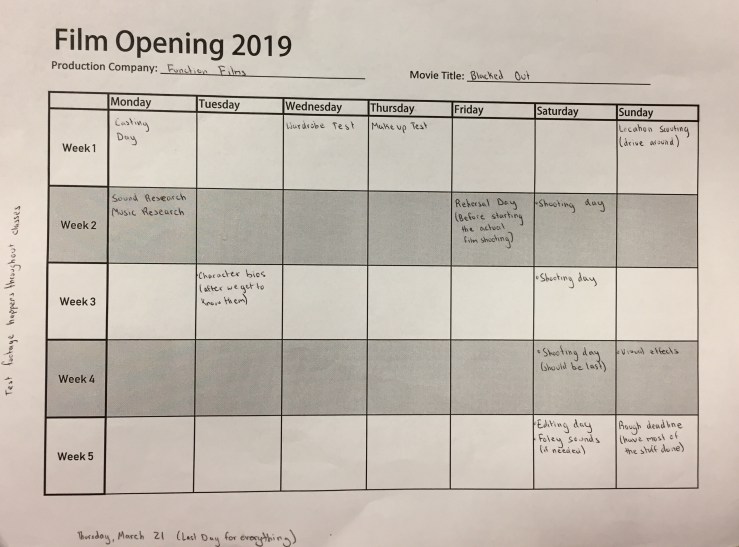
My partner and I scheduled the production of our film opening by choosing dates which will benefit both of our everyday lives. Choosing dates which will keep it organized and flexible in cases of emergencies.
Have you ever thought about how movie industries create sound? This question is rhetorical by the way. Well, sound in movies isn’t always made on set at that specific time. “Apparently there are sounds that are created post-production.” Yeah… after the scene was already shot. Crazy right… this movie stuff is getting really trippy. Anyhow, sound is an important aspect of a movie. Giving the audience the ability to immerse more deeply into the movie, giving them a deeper sense of the mood without have to directly show it visually. Yeah… still crazy.
During our lesson of the ol’ mighty “sound design” our class learned many different types of sound… designs? I don’t know how to call it but you get me. We first started learning about dialogue. By dialogue, I mean the speech.
Dialogue gives the speaker authenticity. This means that the character will seem real, and not just an imaginary creation. Then we went to sound effects… like “thud!” or “crash!” In other (normal) words sound effects are sounds in the film that is not dialogue or music. Giving the audience a more real and complete environment.
Then there is synchronous sound which is the sound that is matched with the action and movements viewed (Sort of like when two things are synchronized). There is also an asynchronous sound… I bet you don’t know what that is… Well, let me tell you. The asynchronous sound is the sound that is NOT matched with the action and movements. Bet you never guessed that.
Direct address is ultimately breaking the fourth wall by directly involving the audience. This will likely be a large aspect that will most likely be used in our movie because it kind of adds a comedic effect to the movie. And our film is going to be an action comedy so…
Sound motifs are a combination of sound effects that are associated with a particular character, setting, situation or idea through the film. I want to use this aspect, however, I am not sure how to implement it into the film. It will most likely be included in the darker more serious scenes where we must change the mood from funny to serious.
Post-synchronization dubbing is adding sound to a scene after it is filmed. Yeah… AFTER. Like what the world is that. But I am pretty sure we are going to end up doing this due to the fact that the locations we chose will most definitely have a loud background.
Off- scene sounds are sounds assumed to be in the general area of the scene but are not shown. This will be used in the blackout scene when the dark figure is rustling in the background trying to remain anonymous and hidden.
Non- simultaneous sounds are those that occur earlier or later in the story than the current image being seen.
Sound perspective is the appearance distance of the sounds’ sources made evident through volume, timber, and pitch. This will most definitely be used for it will create realism to the movie and make it less like a cartoon and more like a live action movie.
Sound bridging is a type of sound editing that occurs when sound carries over a visual transition of the film.
Voice over is a sound device where one hears the voice of a character or narrator speaking, but the character in question is not speaking those words on a screen.
Automated dialogue replacement, better known as ADR, is the process of recording dialogue by the original actor after the filming process to improve audio quality or reflect dialogue changes. ADR can also be used to modify and change the original lines to clarify the content, improve diction or timing, or replace an accented vocal performance. So basically, this is trying to go back and fix all the mistakes that might have occurred during the scene. Due to the fact that we aren’t professional actors, I believe we will be using this aspect a lot because I guarantee that there will be no perfect take.
And then there is FOLEY. What is FOLEY? Well, this is another rhetorical question. I’m just kidding, Foley is the reproduction of everyday sound effects that are added to the film, video, and other media in post-production to enhance audio quality. Including these foley sounds provides the film with a more realistic and natural sense. Rather than keeping the scene uncomfortable and quiet. Don’t worry I didn’t know what Foley was either… however, this quickly changed as we had to produce a quick clip of multiple foley scenes. Whilst producing this video, my partner and I grew familiar with different sounds that could match everyday actions. However, we wanted to challenge ourselves, and do rather unorthodox things. For example, ripping your pants. We didn’t want just tare a piece of cloth, because it wasn’t exaggerative enough. Instead, we ripped a piece of paper to give it a crisper ripping sound. We also had a scene where my partner pretended to urinate on a tree (he didn’t actually pee). However, squirting water on dirt did not make a good enough sound to produce the noise we wanted. So, we gathered some leaves and piled them tightly on top of the dirt, squirting that with water instead. This provided some louder sounds as the water splashed on the leaves rather than solid and firm ground. We did try to exaggerate every aspect of every scene, solely due to the fact that most of the time they provide a more light-hearted and comedic effect to the scene. We wanted to practice doing so because our film will be based off an action comedy.
All in all, we will use all the strategies and aspects of sound design throughout the entire film due to the fact that the locations we chose may not be the best places to film. There may be possible ambiance noises and disruptions. Therefore, I have no firm answer to what aspects we will use, however, it is clear that we will need to use some. Sound editing and sound mixing will be extremely important. And will be used to ensure the best possible quality of film.
CODER wakes up from a serious blackout with no idea what is going on. This will occur with a close up to his face as he sits up. He is extremely confused and unaware of his surroundings. The camera will be shaky representing the confusion and panic. Looks around to find a dark figure in the back of the dark room. Quick pans around the dark room until reaching the dark figure.
CODER: “What the *BLEEP* is going on! AHHHHHHHHHHH!”
DARK FIGURE: “QUIET!” (Loud whisper in a foreign accent)
CODER: “Whoaah….whooo… wha… SHUT UP! I DON’T EVEN KNOW WHO YOU AR…”
—————————————————————————————————————————-
RANDOM FLASHBACK (SCENE 2) – EXT./INT. DIFFERENT UNKNOWN LOCATIONS – MIX OF DAY/NIGHT
A fast zoom into the CODER’s one eye will lead to the first flashback of who the dark figure may be. Flashback turns out to be a random flashback of random event.
CODER: “NAH… don’t know who you are to be honest. Do you wanna… you know… GET THE *BLEEP* OUT OF THE *BLEEPING* DARK!”
DARK FIGURE: Throws pill at the coder’s forehead with aggression. “DO YOU REMEMBER THIS! HUH…HUH.”
CODER: Picks up pill and stares at it with extreme focus.
—————————————————————————————————————————-
REALIZATION (SCENE 3) – EXT./INT. RANDOM LOCATIONS – NIGHT
A huge flashback all the way to the beginning of the story. However, this will be done with an abundance of shots tied together of different action scenes, comedic scenes, random scenes, etc. This montage of events will be played backwards, relatively fast ensuring to slow down drastically in funny, comedic shots representing the main idea of the shot.
—————————————————————————————————————————-
OFFICE (SCENE 4) – INT. OFFICE DESK IN FRONT OF COMPUTER SCREEN – NIGHT
CODER will be typing code into computer ensuring to type the title sequence. Including “DIRECTED BY…/ PRODUCED BY…/ TITLE…/ ETC. The Coder then presses enter to be met with a horrid black screen. Sending him into a rage and ending the introduction to the movie.
)
 Function Films